Senators Schumer and Casey Aim to Trap People Who Might Want a Different Government Service Provider
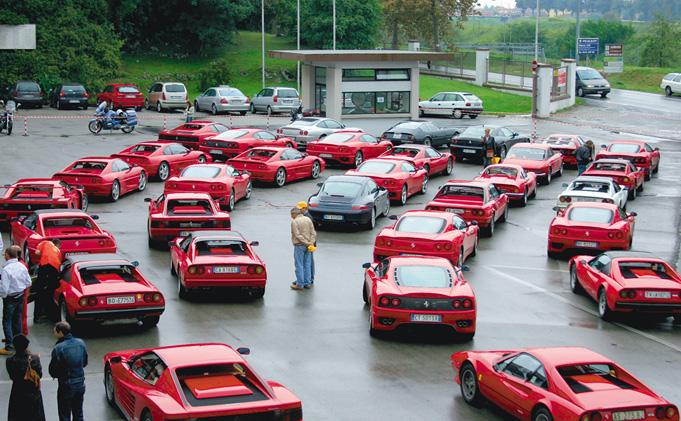
Fearful of millionaires lining up at the border, Senator Charles Schumer wants to increase US exit toll
WASHINGTON — Democratic Sens. Chuck Schumer (N.Y.) and Bob Casey (Pa.) took aim at Facebook co-founder Eduardo Saverin Thursday when they introduced legislation designed to tax expatriates even after they have left the country.
Saverin, who stands to make $4 billion from Facebook’s expected IPO on Friday, announced that he had renounced his US citizenship last week. His move is widely believed to be a financial one.
The two senators, who called his decision “despicable,” said Saverin stands to save $67 to $100 million in taxes by renouncing his citizenship.
Their so-called “Ex-PATRIOT Act” would impose a mandatory 30 percent tax on American investments for those who renounce their citizenship and would also prohibit individuals like Saverin from re-entering the country.
What If Instead of Representing War and Conquest, This Map Showed the Peaceful Evolution of a Market in Governance?
The Micro-foundations of Stagnation
Why France Has So Many 49-Employee Companies (from Bloomberg):
Here’s a curious fact about the French economy: The country has 2.4 times as many companies with 49 employees as with 50. What difference does one employee make? Plenty, according to the French labor code. Once a company has at least 50 employees inside France, management must create three worker councils, introduce profit sharing, and submit restructuring plans to the councils if the company decides to fire workers for economic reasons.
French businesspeople often skirt these restraints by creating new companies rather than expanding existing ones. “I can’t tell you how many times when I was Minister I’d meet an entrepreneur who would tell me about his companies,” Thierry Breton, chief executive officer of consulting firm Atos and Minister of Finance from 2005 to 2007, said at a Paris conference on April 4. “I’d ask, ‘Why companies?’ He’d say, ‘Oh, I have several so that I can keep [the workforce] under 50.’ We have to review our labor code.”
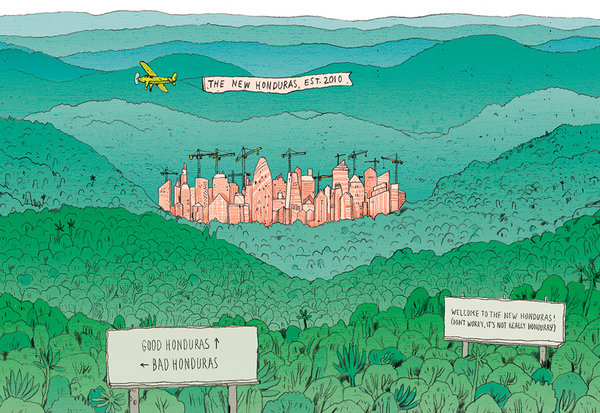 Under the misleading headline: Who Wants to Buy Honduras?
Romer hasn’t yet been able to persuade any nations to take on the role of custodian (Sweden and Britain both passed), so Honduras has named a board of overseers until there are enough people to form a democracy. Romer, who is expected to be chairman, is hoping to build a city that can accommodate 10 million people, which is 2 million more than the current population of Honduras. His charter city will have extremely open immigration policies to attract foreign workers from all over. It will also tactically dissuade some from coming. Singapore, Romer said, provides a good (if sometimes overzealous) model. Its strict penalties for things like not flushing a public toilet may make for late-night jokes, but they signal to potential immigrants that it is a great place if you want to work hard and play by the rules.
 From the Telegraph:
Democracy, the separation of judicial powers and the free press all evolved for essentially one purpose – to reduce the chance of leaders becoming power addicts. Power changes the brain triggering increased testosterone in both men and women. Testosterone and one of its by-products called 3-androstanediol, are addictive, largely because they increase dopamine in a part of the brain’s reward system called the nucleus accumbens. Cocaine has its effects through this system also, and by hijacking our brain’s reward system, it can give short-term extreme pleasure but leads to long-term addiction, with all that that entails…
Submissiveness and dominance have their effects on the same reward circuits of the brain as power and cocaine. Baboons low down in the dominance hierarchy have lower levels of dopamine in key brain areas, but if they get ‘promoted’ to a higher position, then dopamine rises accordingly. This makes them more aggressive and sexually active, and in humans similar changes happen when people are given power.What’s more, power also makes people smarter, because dopamine improves the functioning of the brain’s frontal lobes. Conversely, demotion in a hierarchy decreases dopamine levels, increases stress and reduces cognitive function.
But too much power – and hence too much dopamine – can disrupt normal cognition and emotion, leading to gross errors of judgment and imperviousness to risk, not to mention huge egocentricity and lack of empathy for others.
At around 3:45 on the Colbert:
Carne Ross: I’m part of group that’s trying to set up an Occupy Bank that would actually replace the current banking system. Because I believe, and other group members believe—who include wall street people and dissidents from the system—that you can’t actually reform the current system; you can’t look to Washington, plausibly, to reform the current system, therefore you’ve got to set up an alternative system that would be better. That’s the theory of change we have in our group.
Colbert: Okay, how many people in this group?
Ross: It’s quite small.
Not as small as you think mon semblable, mon frere! Carne, a former diplomat, is the author of The Leaderless Revolution. 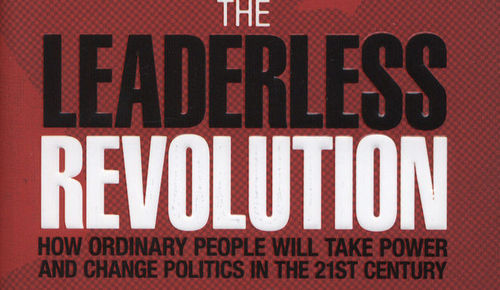
A new paper by Michael Clemens for the Center for Global Development:
Large numbers of people born in poor countries would like to leave those countries, but barriers prevent their emigration. Those barriers, according to economists’ best estimates to date, cost the world economy much more than all remaining barriers to the international movement of goods and capital combined. Yet economists spend much more time studying the movement of goods and capital, and when they study migration at all, they focus on the effects of immigration on nonmigrants in destination countries. I ask why this is the case and sketch a four-point research agenda on the effects of emigration. Barriers to emigration deserve a research priority that is commensurate with their likely colossal economic effects.
Clemens estimates that if people move to places with good rules, worldwide income could increase by 50 to 150 percent.
With the near unanimous support of its Congress, Honduras recently defined a new legal entity: la Región Especial de Desarrollo. A RED is an independent reform zone intended to offer jobs and safety to families who lack a good alternative; officials in the RED will be able to partner with foreign governments in critical areas such as policing, jurisprudence and transparency. By participating, Canada can lead an innovative approach to development assistance, an approach that tackles the primary roadblock to prosperity in the developing world: weak governance.
Many people from around the world would like access to the security and opportunity that Canadian governance makes possible. According to Gallup, the number of adults worldwide who would move permanently to Canada if given the chance is about 45 million. Although Canada can’t accommodate everyone who’d like to move here, it can help to bring stronger governance to many new places that could accept millions of new residents. The RED in Honduras is the place to start.
And don’t miss Romer’s latest white paper on the charter city concept.
Is Every Democracy Destined for the Problems of Greece?
 From, mirabile dictu, Harvard Business Review:
Nearly every major democracy is now struggling with public debt. According to The Economist, the world’s governments currently hold debts of approximately $45 trillion (relative to a world GDP of $65 trillion). And many of the world’s top debt holders are its largest and most powerful democracies…
This issue is often positioned as a crisis of leadership, and indeed, political leadership is relevant to any question of public policy. But given that few mature democratic societies seem to be living within their means, the causes of this persistent and rising debt seem to be at least partially structural.
This should concern young leaders. Macroeconomic problems often impact the young the most; consider youth unemployment rates in France and the U.S., for example, or Japan’s so-called “lost generation.” And younger people both run the risk of losing access to government programs and bearing the burden of paying off those debts in the future through inflation, higher taxes, or other measures.
So why do democracies struggle with debt? I see two key reasons:
1. Concentrated benefits, diffuse costs: In developing Public Choice Theory, economist Gordon Tullock (among others) has written about the concept of concentrated benefits and diffuse costs. When a politician passes a policy that leads to a $5,000 benefit for one person and an incredibly small cost to the rest of society, she is rewarded with the beneficiary’s vote and goes unnoticed by the millions of people who bear that small cost. If the broader population does notice, it is unlikely to organize and act on such a small cost. But when hundreds of politicians pass these benefits for millions of parties, the result are massive increases in spending — often funded through deficits and debt.2. Intergenerational wealth transfer: Debt can often be seen, essentially, a loan from future generations to the current generation. In a democracy, some of the least represented individuals are the young or those from future generations. Young people vote less. They donate and volunteer less. And their concerns — 20, 30, or 40 years in the future — seem distant to voters and politicians concerned with two-year election cycles and short-term economic desires. Therefore, it’s easy for current voters to rationalize spending without worrying too much about the implications for those who will have to repay it and for politicians to pay attention to those who vote, volunteer, and donate more regularly. As economists W. Mark Crain and Robert B. Ekelund, Jr. note, voters regularly prefer deficit spending to pay for benefits rather than taxes, and this can lead to the perennial deficit problem experienced by many democracies.


 Let A Thousand Nations Bloom