A Spanish Tale of Two Cities
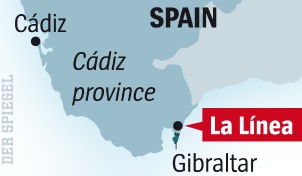 The Spanish city of La Linea is located next to British governed Gibraltar. As Spain’s economy slips into depression–unemployment is at 23 percent and 50 percent among youth–this border region is quickly becoming an experiment in comparative governance.
This frightening article from Der Spiegel offers a window into the diverging fortunes of these two adjacent cities:
The residents of La Línea de la Concepción are leaving, like rats deserting a sinking ship.
They’ve been crossing the border by the thousands since early morning, first the cleaning women, nannies and construction workers, and then the smugglers. They all want to get out of Spain, if only for a few hours. There is work across the border, in the British overseas territory of Gibraltar, and work spells hope for a better life.
By around 11 a.m. on what promises to be a hot early summer’s day, the traffic jam on the Spanish side already stretches from the border, across the coastal road and back to the town hall, where Mayor Gemma Araujo is holding down the fort in her office on the second floor, which has a view of the caravan of commuters. Araujo is 33, a Socialist and the first woman in her position. It’s not exactly the most rewarding job in Spain. A “crisis tsunami” has reached La Línea, says Araujo, and the situation is more serious than ever before. “Our city isn’t bankrupt, but it’s close.”
The city hasn’t been able to pay its employees eight of their last nine monthly salaries. On this morning, the mayor found a sign posted opposite her office door with an unmistakable demand: “Pay or resign.” Her house was pelted with eggs and besieged by protesters, and the mob set fire to her secretary’s car.
At the NYTimes, Uwe Reinhardt takes up a familiar idea here in these pages:
Here is my idea of an approach. Let us set up two distinct systems for health care within our nation. Call one the Social Solidarity system and the other the Libertarian system. Ask young people — at age 25 or so — to choose one or the other.
People joining the Social Solidarity system would know that they will be asked to subsidize their less fortunate fellow citizens in health care through taxes or premiums or both. They would also know, however, that the community will take care of them, and they will not go broke, should serious illness befall them.
People choosing the Libertarian system would not have to pay taxes to subsidize other people’s health care, and they would pay actuarially fair health insurance premiums — low for healthy people and high for sicker people.
Libertarians, however, would not be allowed to come into the Social Solidarity system, unless they were so pauperized as to qualify for Medicaid. Hospitals would have every right to use tough measures to make them pay their medical bills in full, to prevent freeloading at the expense of others.
Structuralism: a movement for good governance
The political news cycle is entertaining in about the same way that a tornado watch is entertaining: nothing good comes of it, but there is a lot of noise and activity. I’m sadly addicted. Every time the legislature passes a dictionary-thick bill that nobody likes or ignores another impending financial disaster I struggle to restrain myself from screaming “institutional sclerosis!” at my computer screen.
Political activists of every generation learn the same sad lessons. It’s easy to identify areas where the law can be improved, sometimes with huge social gains. But they soon discover that lawmaking is controlled by a bizarre machine full of biases against good policy. The best of intensions are no match for the force of institutional inertia.
In short, they rediscover some small portion of the classic problems of collective action first written about by Public Choice economists. For example, the case against agricultural subsidies is as solid as anything in economics. But because of the problems of concentrated benefits and diffuse costs, not to mention rationally ignorant voters, the subsidies remain – much to the chagrin of policy experts and economics professors.
If our political structures are biased against good law then we should divert resources to discovering better political structures. Researching the policy that an ideal government would implement might be an interesting intellectual exercise, but it has few practical benefits in the reality we live in.
Traditional political conversations consist of arguments over policy and personality. If we want better law, we need to shift the conversation to meta-politics (and even meta-meta-politics). First lets discover a process to drive continuous improvement in our political institutions, instead of the creeping decay we see today. Then we can get back to politics.
Unfortunately “meta-politics” isn’t a great brand name. So I invented a new political philosophy for those of us who recognize the importance of government structure: “Structuralism”.
In essence, Structuralism is the political manifestation of Public Choice economics. Traditional political ideologies are concerned with pushing a set of policy recommendations – taxes should be higher or lower, some activity should or should not be punished with jail time, and etc. But structuralism advocates designing government stuctures so that lawmakers have incentive to create good policy.
Problems of collective action, coordination problems, status quo bias, misaligned incentives, institutional sclerosis, regulatory capture – these are the kind of problems that concern structuralists. We seek to create a healthy substrate for a thousand different kinds of society to grow and prosper. Structuralist ideas for achieving better governance include subsidiarity, dynamic geography, free exit, written constitutions, independent courts, separation of powers, charter cities, seasteading, term limits, built-in sunset on regulations, license-free zones, seo services uk, voting reforms, and polycentric law, among others.
Structuralism is neither left nor right. Structuralists welcome anybody who accepts the legitimacy of the concept of public choice economics – that politicians respond to incentives, so we should get those incentives right. In this increasingly gridlocked political world, plagued by public debt and legacy red-tape, where state and national governments remain paralyzed and incapable of passing urgently needed reforms, structuralism is highly relevant. It is the movement for the needs of our times.
The next time someone asks you about your political beliefs, tell them “I’m a structuralist, I want to make political institutions function better”. When they are intrigued and ask you how you are going to do that, point them here. Let’s move the political conversation away from policy details and holy wars. I’m tired of arguing whether the top marginal tax rate should be 32% or 35% while the machinery of government rusts towards perfect entropy.
Videos from the 2012 Seasteading Conference Are Up
Here’s Joe Quirk, who’s writing the much anticipated Seasteading Book with Patri.
Joe Quirk – How Seasteading Will Change The Future from The Seasteading Institute on Vimeo.
View the others here.
A great article in the Atlantic on competitive governance in action in the Pearl River Delta region:
Indeed, Hong Kong is quickly becoming the hub of a new version of the “one country, two systems” motto used by the mainland to characterize its relationship with Hong Kong, Macau, and Taiwan. The cluster of cities around (and including) Hong Kong forming the Pearl River Delta – from Shenzhen and Guangzhou in the north to Macao and Zhuhai to the west – are becoming an archipelago of inter-locking hubs with varying policies related to visiting, immigration, business and political freedom. Call it “one mega-city, many systems.”
This increasingly integrated urban cluster of almost 100 million souls constitutes China’s mostly densely populated urban corridor. Some experts say it’s actually the biggest city in the world, even if it bears several names. Like an archipelago of islands growing closer rather than farther apart, the Pearl River Delta’s main cities are fusing into a de facto mega city-state that easily would sit in the G20. The Pearl River Delta is China’s wealthiest zone, with an aggregate GDP of over $800 billion, slightly larger than that of the Netherlands.
But far from being unified, the Pearl River Delta region is the foremost model of the future multi-tiered pan-urbanism, a mega-cluster of diversified regulatory districts: physically linked but acting almost like micro-states unto themselves. In a single day, you can cross from Hong Kong, an open society with aggressively free media, to more state-directed but still very global Shenzhen or less-glitzy Dongguan, to the freewheeling and somewhat sleazy gambling haven of Macau, or the tax-free master-planned Zhuhai/Hengqin. Along the way, you will go through checkpoints ranging from full-fledged border crossings requiring visas to light security checks.The journey reveals the different constitutions and political priorities playing out even as the Delta region physically becomes ever more one single city.
The Breakdown of Large Nations
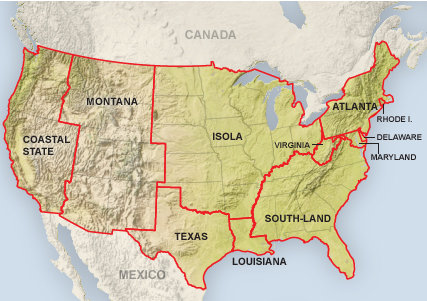 I haven’t read Leopold Kohr’s book, the Breakdown of Nations, but it seems promising and helpful, if only because it shows that one can come to conclusions in the spirit of competitive governance from typically left of center political assumptions. Frank Jacobs has a nice summary of Kohr’s career and influence in the NYTimes:
In 1943 Kohr secured a professorship at Rutgers, where he taught for 12 years, during which time he finished his central work, “The Breakdown of Nations.” Published first in Britain, in 1957, the book develops his theory of the optimal size of polities: “There seems to be only one cause behind all forms of social misery: bigness.” Size was the root of all evil: “Whenever something is wrong, it is too big.”
Unsurprisingly, Kohr’s guiding principle was anarchism, “the noblest of philosophies.” But its inherent nobility, he recognized, also made it utopian: a truly anarchist society could do away with governments and states only if all individuals were ethical enough to respect one another’s boundaries. Kohr cleverly turned this utopianism upside down, from weakness to strength: any party, any leader, any ideology promising utopia is automatically wrong, or lying [7]. Acceptance of utopia’s unattainability, in other words, is the best insurance against totalitarianism.
But if the ideal state cannot be attained, at least it can be approached, Kohr thought, by reducing the scale of government. Which sounds a lot like the famous quote from Thoreau’s “Civil Disobedience”: “That government is best which governs least.” But in Kohr’s vision, smaller government should mean, first and foremost, a smaller area to govern. In such smallness, greatness resides. Counterintuitive as that may sound, didn’t Greece and Italy have their Golden Ages when they were divided into countless city-states? Not a coincidence, according to Kohr: smaller states produce more culture, wealth and happiness.
Link Archipelago
Peaceful Scottish Secession?
The European Union’s tectonics are difficult to predict, messy, and possibly nasty. This year may usher in a United States of Europe bound together in a fiscal union, or the whole continent may fly apart as fast as they can print old currencies. But whatever happens, the center cannot hold. In the long run, it would be best for the Euro-countries to go their own way. The structural differences in the region’s economies are far too great to overcome. But getting to that point will be very painful. We say let a thousand nations bloom, but peaceful and orderly is the way to go. Like the Scottish.
The Scots have been quietly making moves to declare independence from the UK:
MSPs have for the first time voted in favour of Scotland becoming independent.
First Minister Alex Salmond hailed the vote, by 69 to 52, as a “milestone” in the country’s history. He also revealed that 15,000 people have backed a declaration stating it is “fundamentally better” if decisions about the country’s future are taken by the people of Scotland.
The declaration is a key part of the Yes Scotland cross-party campaign for independence, which officially got under way just six days ago. At the time of its launch Mr Salmond declared that if one million voters put their names to it “then we shall win an independent Scotland”.
The SNP leader revealed 15,000 people had already given it their backing as Holyrood debated the country’s constitutional future.
Labour, Tories and the Liberal Democrats all united round an amendment put forward by Johann Lamont, the Scottish Labour leader. It argued that it was in Scotland’s best interest to remain part of the United Kingdom and that the country was “stronger together and weaker apart”.
 Matt Siegel in the latest issue:
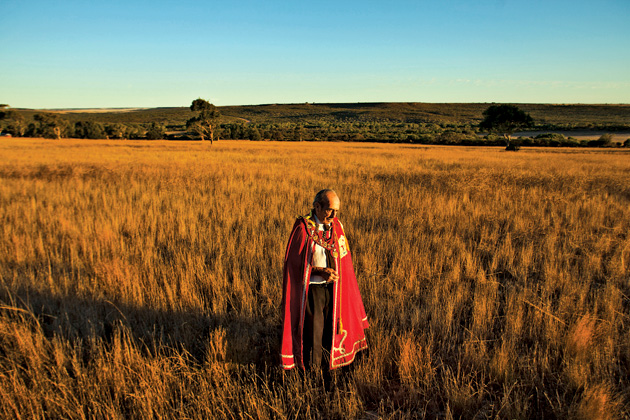
He is Prince Leonard of Hutt, the absolute monarch of 18,500 acres of farmland in Australia’s sparsely populated wheat belt, about a five-hour drive north of Perth. His kingdom, the Principality of Hutt River, declared its independence on April 21, 1970, to protest newly introduced grain quotas that Prince Leonard (a farmer whose real name is Leonard Casley) says would have crippled him financially. After unsuccessfully petitioning the government for an exemption, he brushed up on his English common law and promptly seceded.
That decision made him the founding father of a micro-secession movement that has popped up across the globe, including in the U.K. and Israel. Hutt River is one of about 30 micronations spread across Australia, ranging from the ridiculous—the four people who comprise the Republic of Awesome—to the sincere, like the Principality of Snake Hill north of Sydney that takes itself extremely seriously, even if few others do.


 Let A Thousand Nations Bloom